James Patrick Photography
Most fitness professionals aren’t struggling because of bad programs.
This isn’t just documentation. You are creating your production of credibility.

They’re struggling because no one is watching… and more importantly, no one is converting.
Now more than ever, video is the front door to your brand. And in today’s landscape, the gap is widening between those who simply post content and those who strategically create content that drives results. This is not about going viral, so get that out of your mind asap.
This is about building trust, establishing authority and guiding viewers towards action.
Here are the video strategies that are not only trending right now, but actively driving conversions for top-performing fitness professionals.
1. Proof Over Promise: Content That Shows, Not Tells
The highest-converting fitness content today is rooted in evidence, not opinion.
● Social proof drives decisions: Nielsen reports that 92% of consumers trust recommendations and results from real people more than traditional advertising.● Video showing results outperforms generic content: HubSpot 2025 found that videos showcasing real client progress increased lead conversion by up to 80%.
Transformation videos, client wins and behind-the-scenes progress reduce skepticism and increase perceived credibility. Execution is critical: poor lighting, inconsistent framing, or lack of emotional context can drastically reduce audience engagement.
Best practices backed by research:
● Match angles and lighting between before-and-after shots for continuity.● Capture transitional moments, as behavioral studies show that emotional reactions increase memory retention and action.● Use subtle motion (pan, zoom) to hold attention and increase engagement.
This isn’t just documentation. You are creating your production of credibility.
2. Short-Form Video as a Direct Sales Tool
Short-form video remains the dominant force across platforms, but its role has evolved. This is no longer just top-of-funnel content. Today, short-form video is closing sales directly within the platform.
The difference comes down to structure:
● The first two seconds must interrupt the scroll● Movement should begin immediately● Framing should feel close and intentional● Audio clarity matters more than visual perfection
The goal is not just to get attention but to quickly establish authority and lead the viewer toward a decision.
3. Search-Driven Content: SEO for Social Media
A major shift happening right now is how users search for information.
Instead of turning to traditional search engines, audiences are using platforms like Instagram and TikTok to find answers to questions like “best fat loss workouts” or “how to fix squat form.”
● TikTok reports that over 60% of users discover products via search queries on the app.● Videos optimized around search terms and captions can improve discoverability by up to 70% (TikTok Business Insights, 2025).
This changes how content should be created.
High-performing videos are now built around search intent:
● Hooks mirror real search queries● Key phrases are spoken clearly on camera● Captions reinforce those keywords
This isn’t just content creation. It’s content indexing.
4. Client-Centered Content and User-Generated Momentum
Polished brand content is no longer the most persuasive asset. Content featuring real clients, their voices, their experiences and their results is outperforming highly produced media when it comes to conversions.
James Patrick Photography
Why?
Because believability beats perfection.
However, this doesn’t mean abandoning production standards. It means refining them:
● Maintain clean audio and intentional framing
● Use natural, directional light
● Preserve authenticity while removing distractions
The goal is controlled authenticity, not careless execution.
5. Narrative-Driven “Day in the Life” Content
Lifestyle content continues to perform, but only when it’s structured with intention. Random clips of a daily routine are easy to ignore. Story-driven content, however, builds connection and keeps viewers engaged.
Effective execution includes:
● Establishing shots to set context● A clear progression of actions● A defined payoff or takeaway
When done right, this type of content sells proximity, and people are far more likely to hire someone they feel connected to.
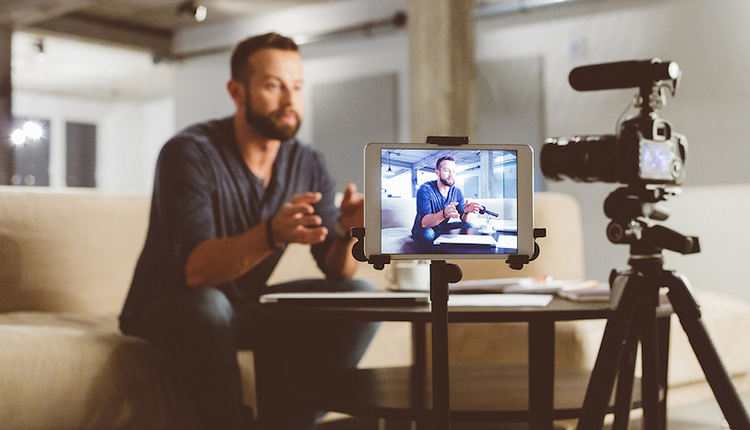
6. Authority Positioning: Speaking with Clarity and Conviction
Direct-to-camera videos remain one of the most powerful tools for conversion.
They work because they communicate certainty.
But poor production can instantly undermine authority. Simple adjustments make a significant difference:
● Use directional lighting to shape the face
● Separate the subject from the background
● Frame at eye level or slightly below to create presence
● Control depth to eliminate distractions
Authority is not just what you say. It’s how you visually present it.
7. Movement-Driven Cinematic Content That Stops the Scroll
High-impact, visually dynamic fitness content continues to play a key role in grabbing attention.
When used correctly, cinematic sequences elevate perceived brand value and create a level of polish that separates professionals from hobbyists.
However, more is not better.
To maintain effectiveness:
● Use slow motion selectively● Prioritize clarity of movement over stylization● Shape the body with directional lighting● Focus on contrast and separation
The goal is not to impress other creatives. It’s to capture and hold attention long enough to deliver a message.
8. Intentional “Raw” Content That Builds Trust
Low-production content is performing well… but not for the reason most people think.
It’s not the lack of quality that drives results. It’s the perception of authenticity.
The strongest performers in this category are not careless. They are deliberate:
● Natural light is used with intention● Backgrounds remain clean and distraction-free● Framing still guides the viewer’s focus
This is not unpolished content. It’s strategically simplified content.
9. Conversion Architecture: Content That Leads to Action
One of the biggest gaps in most fitness content is the absence of a clear next step.
High-performing videos are not just informative or entertaining… they are directional.
They follow a simple but effective structure:
● Hook to capture attention● Value to establish authority● Proof to build trust● Call to action to drive behavior
Without this structure, even high-quality content fails to convert.
The Bottom Line
The fitness professionals seeing the greatest success right now are not simply creating more content.
They are creating content with intention. They understand how platforms are evolving, how audiences are consuming information, and how to bridge the gap between attention and action.
Because production quality is not about making content look cinematic.
It’s about removing friction between the message and the audience.
And when done correctly, video becomes more than just content.
It becomes a system for building trust, establishing authority, and driving consistent, measurable growth.
James Patrick is a two-time best-selling author, photographer, and media strategist specializing in helping brands amplify authority and generate leads through high-impact visual storytelling. With over 800 magazine covers in health, fitness, and wellness, James combines editorial expertise with commercial insight to create content that converts. He is also the founder of James Patrick Photography and LUMEDIA Creative, a full-service creative agency. Learn more at: www.jamespatrick.com.